South Korea Slowly: Seoul Palaces, Jeju Lava Coast, and the Busan Hills
By Curious Traveller ·
Two stops from Hongdae on the subway, Mangwon-dong is the Seoul that the K-pop itineraries skip. The covered market opens at seven; the vendors who have run the same tteokbokki, pajeon and dried-fish stalls for thirty years are arguing with the young baristas whose cafes have crept into the lanes behind them, and both sides are, visibly, winning. A good food guide here does twelve tastings in three hours and never once says the word "authentic", because the word is unnecessary. This is the premise of a slow South Korea: the country has spent two decades building the most efficient tourism infrastructure in Asia, and the best of it is still the part that happens at walking pace, with somebody who grew up on the street.
What follows is a route, not a checklist: Seoul for the palaces and the mountain inside the city, the DMZ handled honestly, Jeju for the volcanic coast that UNESCO put on its list, Busan for the hills and the coast and the bathhouses, Gyeongju as the day trip that explains the previous thousand years. Each section names the South Korea guides on imerzn who actually run that part of the country, so that the plan turns into a booking rather than a bookmark.
Seoul — Gyeongbokgung at opening, Changdeokgung for the garden
Seoul's five Joseon palaces are not interchangeable, and the city's tour buses treat them as if they were. Gyeongbokgung, founded in 1395 and rebuilt after the Japanese occupation dismantled most of it, is the grand one — the throne hall, the lotus pavilion, the changing of the guard at the Gwanghwamun gate that photographs so well because it was choreographed to. It is worth doing, and it is worth doing at 9 AM on a weekday, before the hanbok-rental crowd arrives from Insadong. A three-hour Seoul palace morning tour with Seoul City Tour Co takes in Gyeongbokgung, the National Folk Museum beside it and Jogyesa, the head temple of Korean Zen Buddhism, before the day gets loud — and the full-day palace tour is the version for people who want the whole Joseon story in one go.
Changdeokgung is the palace to choose if you can only choose one. It is the one that UNESCO listed — the World Heritage entry for Changdeokgung Palace Complex cites the way the buildings follow the slope of the land rather than imposing a grid on it — and its Secret Garden, Huwon, is a seventy-eight-acre sequence of ponds, pavilions and ancient trees that can only be entered on a timed guided walk. Book the garden slot first and build the day around it. The lanes of Bukchon Hanok Village sit between the two palaces: six hundred traditional tiled-roof houses on a hillside, most still lived in, which is why the signs ask you to keep your voice down. A private Bukchon and city tour with an English-speaking driver from Welcome Pickups is the comfortable way to string the palaces, Bukchon and Insadong together in a single morning.
Seoul — the market circuit, Mangwon to Gwangjang
Seoul eats in markets, and the market that tourists know — Gwangjang, with its bindaetteok mung-bean pancakes and the raw-beef yukhoe alley — is good precisely because Seoulites still eat there. The market that tourists do not know is Mangwon, which is where the Taste Seoul Like a Local: 12 market tastings walk from FoodaQuest Experiences begins. The tastings move from the covered market to the cafe lanes behind it and then down to the Han river park, which is the arc of the neighbourhood itself: wholesale vegetables, a rice-cake stall that has not changed its recipe since the 1990s, a third-wave roaster run by someone whose grandmother sells kimchi forty metres away.
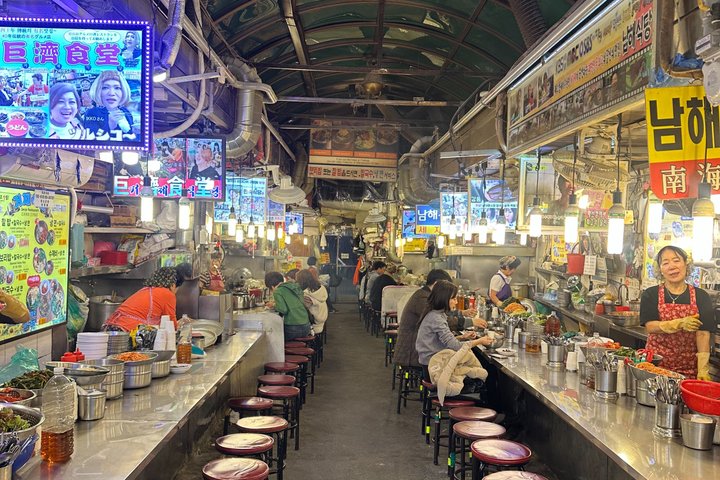
The rule for Seoul markets is the rule for Tokyo's depachika and Lisbon's mercados: go hungry, go early, and let the person who knows the vendors order. The dishes that matter — the hand-cut kalguksu noodles, the sundae blood sausage that is better than it sounds, the hotteok sweet pancakes that are exactly as good as they sound — are rarely the ones with English menus.
Seoul — the mountain inside the city
Seoul is the only capital of its size with a national park inside the city limits. Bukhansan's granite peaks rise directly above the northern districts, and the fortress wall that the Joseon kings built along the ridgeline in 1711 is still walkable for most of its length. The Seoul Hike: The Historic Trail from ZenKimchi Experiences starts at Gupabal Station on Line 3 and climbs through pine forest to the wall, with the whole city laid out below and the Han river silver in the afternoon. It is six hours and it is the single best way to understand why Seoulites of every age own hiking poles. Come down in time for the Han river night drive: the bridges are lit in sequence after dark, and the N Seoul Tower on Namsan is the fixed point the whole skyline rotates around.
The DMZ — handled honestly
The Demilitarized Zone is forty minutes north of Seoul and it is not a theme park, although the souvenir shops at Imjingak do their best. The honest version of the day visits the Third Tunnel — the infiltration tunnel discovered in 1978, which you walk down into wearing a hard hat — the Dora Observatory with its view across the border to Kaesong, and the Freedom Bridge, and includes a conversation with someone who left the North. The DMZ tour with a North Korean defector's talk from Seoul City Tour Co is built around exactly that conversation and, unusually, routes around the shopping stops that pad out most DMZ days. Bring your passport; access is controlled by the military and the schedule changes with the political weather. Nobody who has done this day well describes it as fun. Everybody describes it as necessary.
Jeju — the volcanic island that UNESCO put on the map
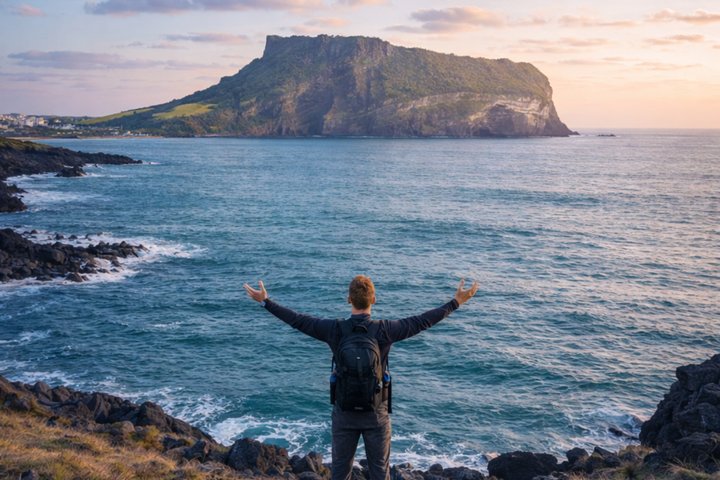
Jeju is an hour's flight south of Seoul and a different country in everything except the language. The island is a single shield volcano, Hallasan, at 1,947 metres the highest mountain in South Korea, with a coastline of black lava cliffs, tuff cones and the longest lava-tube cave systems in the world. The UNESCO World Heritage listing for Jeju Volcanic Island and Lava Tubes covers three parts of it: the Hallasan summit, the Geomunoreum lava-tube system that includes the Manjanggul cave, and Seongsan Ilchulbong, the tuff cone that rises out of the sea on the east coast and that half the island climbs before dawn to watch the sun come up.
The island's other UNESCO listing is a living one. The haenyeo — the women free-divers who harvest abalone, sea urchin and conch without breathing equipment, many of them in their seventies and eighties — were inscribed on UNESCO's intangible cultural heritage list in 2016, and the daily diving demonstration below Seongsan Ilchulbong is the one performance on the island that is not a performance. Lucas Travel runs the island's join-in day tours and they are the cheapest way onto the UNESCO coast: the Jeju UNESCO highlights tour with the lava cave and haenyeo show is the east-coast classic, the East Jeju day with Manjanggul lava tube goes underground, and the south and west highlights day with Hallasan and the lava cliffs covers the half of the island most two-day visitors never reach. Two days is the minimum; three lets you add the tea fields and the oreum — the four hundred parasitic cones scattered across the interior that islanders climb the way other people take an evening walk.
Busan — hills, coast, bathhouses
Busan is Korea's second city and its port, and it feels the way port cities feel: steeper, saltier, less interested in your opinion. Gamcheon Culture Village is the hillside of pastel houses that fills every Busan feed, and it is worth the climb, but the better version of Busan is the one that alternates the coast with the hills. The Busan private hiking tour from Korea Go Tours climbs Geumjeongsan, the fortress mountain above the city, for the panorama that explains the geography — the harbour, the bridges, the beaches at Haeundae and Gwangalli strung along the east. The hidden gems private tour is the one to book for the parts of the city that do not photograph: the Jagalchi fish market before it has been cleaned, the temple on the rocks at Haedong Yonggungsa before the coaches arrive.
And then the bathhouse. Korea's jjimjilbang culture is the thing visitors are most nervous about and most grateful for afterwards, and Busan does it at scale. The Busan head spa, Korean home experience and Gamcheon village day pairs a scalp-treatment spa with an afternoon in a local household, which is the closest a visitor gets to the domestic Korea that hotels are designed to keep out.
Gyeongju day trip — the thousand-year capital
Gyeongju is an hour from Busan by KTX and was the capital of the Silla kingdom for almost a thousand years, which is why the city centre is a park of grass-covered royal burial mounds and why the countryside around it is one of the densest concentrations of early Buddhist art in Asia. The UNESCO listing for Seokguram Grotto and Bulguksa Temple covers the eighth-century granite Buddha seated in an artificial cave above the temple, lit so that the dawn sun reaches his forehead on the solstice, and the temple below with its two stone pagodas, Dabotap and Seokgatap, that appear on the ten-won coin. The private Gyeongju UNESCO tour from Korea Go Tours does Bulguksa, Seokguram and the tumuli park in a day with a licensed guide, which matters here more than elsewhere: Silla history is not self-explanatory, and the difference between a guided and an unguided Gyeongju is the difference between a park and a capital.
Where to sleep — hanok vs hotel vs jjimjilbang (honest tradeoffs)
The hanok stay — a night in a traditional courtyard house with ondol underfloor heating, paper-screened doors and a futon on the floor — is the Korean equivalent of the Kyoto machiya, and the range in quality is just as wide. In Bukchon and Seochon in Seoul and in the old town of Jeonju the genuine ones are family-run, have four or five rooms, and will cook you a breakfast you remember. The renovated ones with en-suite showers and heated floors are the sensible choice for a first visit. The floor-sleeping is real and most Western backs manage two nights of it well and five badly; plan the hanok for the middle of the trip, not the whole of it.
The hotels are excellent and anonymous, and the Seoul business districts around Gangnam and Jongno have more good mid-range rooms than the city can fill outside of cherry-blossom week. The jjimjilbang — the twenty-four-hour bathhouse with sleeping halls — is a legitimate overnight option that costs less than a hostel, and the big Seoul ones are clean, safe and entirely used to foreigners; it is also the least restful night you will spend in Korea, which is part of the point. Jeju is a car island; book accommodation on the coast you plan to explore, because crossing the island twice a day eats the trip.
When to go
April for cherry blossom and the first warm days, with the caveat that the whole country knows it. Late October and early November for the autumn colour on Bukhansan, in the Changdeokgung garden and across Jeju's oreum, which is the better season and the less crowded one. July is the jangma monsoon and August is humid in a way that makes the mountain walks a different sport. Chuseok, the harvest festival in September or October depending on the lunar calendar, closes shops and empties Seoul for three days as everyone goes home to their ancestral towns — a good time to be in Seoul's palaces, a bad time to be on the expressways. The Korea Tourism Organization publishes the festival dates each year.
Featured South Korea guides on imerzn
The guides and operators below are live on imerzn with bookable dates. Each is linked from the South Korea page, where the full list with prices and availability is kept current.
- Seoul City Tour Co — the palace mornings, the full-day Joseon circuit and the DMZ day with a defector's talk, all from Seoul with hotel pick-up. See the Seoul experiences.
- FoodaQuest Experiences — the twelve-tasting Mangwon market walk; the single best first morning in Seoul.
- ZenKimchi Experiences — the Bukhansan fortress-wall hike, run by people who have been writing about Korean food and mountains for twenty years.
- Welcome Pickups — private English-speaking drivers for Bukchon, Nami Island and the Han river at night, for travellers who want the sights without the coach.
- Lucas Travel — the Jeju join-in tours: UNESCO east coast, lava tubes, haenyeo, the south and west with Hallasan, and two- and three-day loops. See the Jeju experiences.
- Korea Go Tours — licensed-guide private days in Busan, Gyeongju and Ulsan, including the hiking and bathhouse days above. See the Busan experiences.
Things to do in South Korea (Seoul, Jeju, Busan and beyond)
The route in one list, in the order the country rewards it:
On this trip: our slow Kyoto and Tokyo guides for the Japan leg that a Busan–Fukuoka ferry makes easy, and what local guides do differently for why the Mangwon market walk is not available any other way.
— The Curious Traveller
Read more from The Curious Traveller on the imerzn blog. Learn about imerzn's mission on our about page.